
Why Did Uber Eats leave restaurant delivery in Brazil?
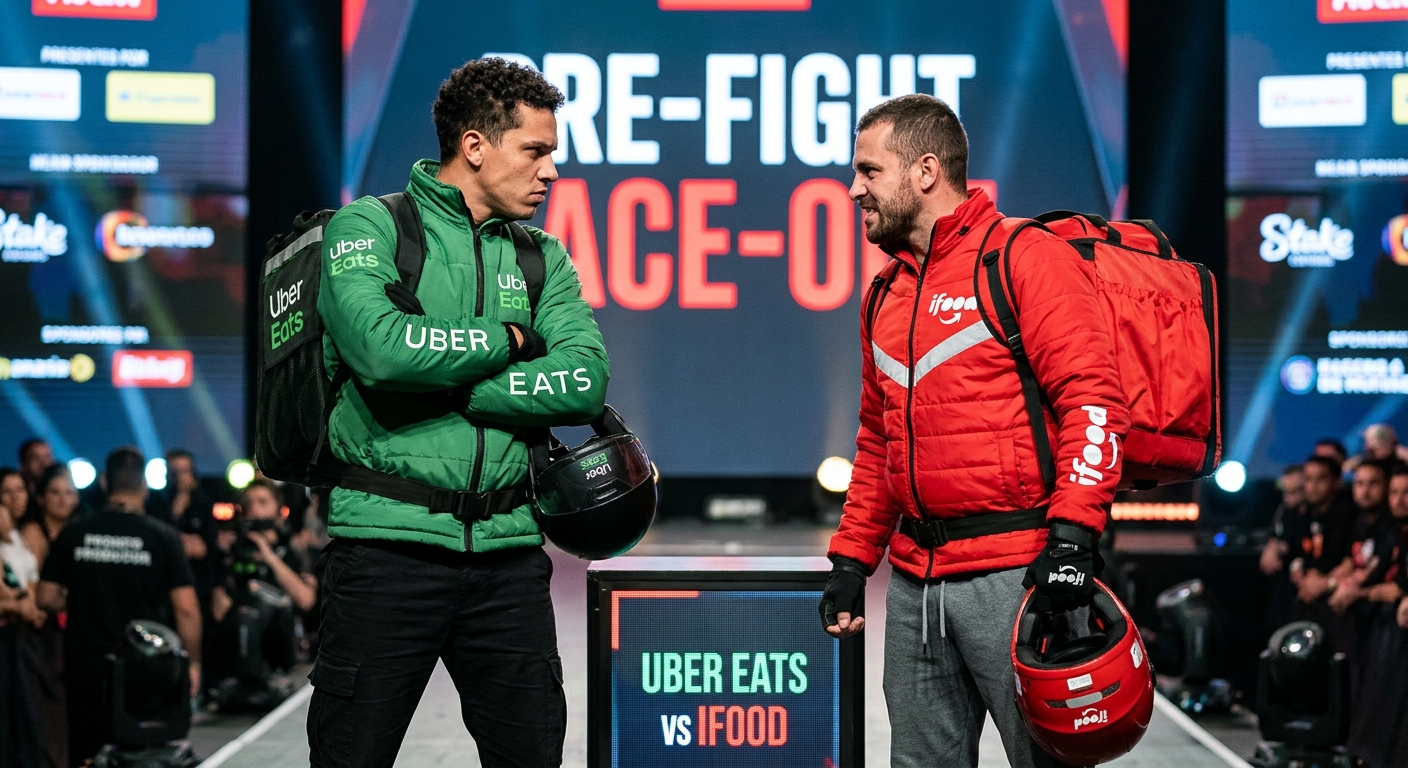
Uber Eats stopped restaurant delivery in Brazil in 2022. It could not reach first place against iFood. What foreign brands can learn from the exit.
Summary
Uber Eats stopped restaurant delivery in Brazil in March 20221 because, in its CEO’s words, Uber could not be number one there11. Uber Eats had been in Brazil since 201616, 18, yet survey data put it at about 8% of delivery-app market share, against roughly 70% for the local leader, iFood13. Uber also told Brazil’s competition authority that iFood’s exclusive contracts with popular restaurants contributed to the decision10. While Uber Eats left Brazi, Uber did not: it kept rides, grocery and package delivery1, and since 2025 it has offered iFood’s restaurant delivery inside its own app8, 9.
Methodology
We used public sources only: Uber’s own announcements and its filings with the US Securities and Exchange Commission (SEC); transcripts of Uber’s earnings calls; decisions; and CADE’s public case index (Brazil’s competition authority). Announcment posts came from Brazilian and international press. All sources were checked on 9 November 2026.
We graded each claim by who makes it. Company-stated means a party’s own words, either on its own channel or quoted directly in the press. Analysts and press means explanations from journalists, trade bodies or surveys. Our inference is our reading of the evidence, and we say how sure we are. We quote only words we have checked against the source. Portuguese quotes are followed by our translation.
We found no Brazil-specific Uber Eats figures in Uber’s filings3, so there are no public numbers on its orders or profit in Brazil and thus we take statements from figures such as Uber’s CEO on face value. One press analysis arguing that factors other than iFood also mattered was not available to us, so this account may underweight those factors. Owing to a lack of reliable evidence on Uber Eats’ prices or restaurant fees in Brazil, we are unable to draw conclusions on pricing.
Large Language Models were used to write this post, but all claims were verified manually for veracity.
Timeline
| Date | Event |
|---|---|
| Dec 2016 | Uber Eats launches in São Paulo, at first by invitation only and in part of the city16, 18. |
| May 2020 | Uber tells investors it will be “in first or second position in all Eats markets” and leaves seven countries. Brazil is not one of them2. |
| 25 Sep 2020 | Rappi complains to CADE about iFood’s exclusive restaurant contracts6, 19. |
| 10 Feb 2021 | Uber asks to join the CADE case as an interested party. CADE agrees on 19 March 202115. |
| 10 Mar 2021 | CADE orders iFood not to sign new exclusive contracts. Existing ones stay in force6. |
| 19 Mar 2021 | Uber’s request to join the case is approved by CADE18 |
| 6 Jan 2022 | Uber announces the end of restaurant delivery in Brazil (the date of Uber’s announcement1; Uber’s later filing to CADE gives 7 January10). |
| 4 Mar 2022 | Uber’s lawyers tell CADE that iFood’s conduct contributed to the decision10. |
| 7 Mar 2022 | Last day of restaurant delivery, according to Uber’s announcement1. |
| 8 Jun 2022 | Uber’s CEO says Uber left because it could not be number one in Brazil11, mirroring the story it told its investors two years prior. |
| 8 Feb 2023 | CADE approves a settlement with iFood that limits its exclusive deals7. |
| 14 May 2025 | Uber and iFood announce a partnership: iFood delivery inside the Uber app, Uber rides inside iFood8. |
| 17 Nov 2025 | The integration and a joint subscription start in Belo Horizonte, with all shared cities due by January 20269. |
What happened and why
What Uber said
Uber’s announcement of 6 January 2022, titled “Nova estratégia de Delivery no Brasil” (“New delivery strategy in Brazil”), gave no reason for dropping restaurants1. It described a new focus on grocery delivery (Cornershop by Uber), packages (Uber Flash) and delivery for businesses (Uber Direct). It said grocery and business delivery were growing fast1.
The reasons came later, through two other channels, and they are different.
On 4 March 2022, days before the service closed, Uber’s lawyers sent a submission to CADE, and a public version of it is on CADE’s case register10. It says:
“Infelizmente, as barreiras artificiais impostas pelo iFood com sua conduta exclusionária, que são o foco do presente Inquérito Administrativo por esta d. SG, contribuíram para a decisão da Uber de encerrar as operações do aplicativo de intermediação de delivery de refeições Uber Eats”10
“Unfortunately, the artificial barriers imposed by iFood through its exclusionary conduct, which are the focus of this Administrative Inquiry by this General Superintendence, contributed to Uber’s decision to end the operations of the Uber Eats meal-delivery intermediation app.”
The same submission argued that smaller partners could not close the gap:
“Mesmo que a Uber Eats desenvolva relações comerciais com restaurantes menores e mais lojas, isso não seria suficiente para exercer uma pressão competitiva efetiva no iFood, dada a dependência dos restaurantes no volume de pedidos provenientes da plataforma da Representada.”10
“Even if Uber Eats developed commercial relationships with smaller restaurants and more stores, this would not be enough to exert effective competitive pressure on iFood, given the restaurants’ dependence on the volume of orders from iFood’s platform.”
In June 2022 Uber’s CEO, Dara Khosrowshahi, gave a simpler reason in an interview with Bloomberg Línea: “if we couldn’t be number one, we decided to leave and focus on other markets”11.
That matches a rule Uber put on file with the SEC in May 2020: to be “in first or second position in all Eats markets”, investing in some countries and leaving others2. The seven markets Uber left then made up 1% of Eats gross bookings but 4% of Eats adjusted EBITDA losses2.
We found no mention of Brazil or iFood in Uber’s earnings calls for the two quarters around the exit4, 5, and no Brazil-specific figure in its 2021 annual report3. On the February 2022 call, Uber reported its Delivery segment’s first positive adjusted EBITDA, $25 million, with no country breakdown4.
What others said
iFood said its commercial policies were “em estrita conformidade com a legislação concorrencial” (in strict compliance with competition law), and that online delivery was a sector in constant change12. Rappi, a rival, said it regretted Uber Eats’ exit and believed in a fair, freely competitive market12. Abrasel, the bar and restaurant association, called the exit “um indicativo de que esse mercado esteja adoecido, precisando de um remédio mais forte” (a sign that this market is sick and needs stronger medicine)13.
CADE, the regulator, had already acted before Uber left. In March 2021 it stopped iFood from signing new exclusive contracts with restaurants, while letting existing ones run6. Its view then was preliminary, not a final finding6. In February 2023, about eleven months after Uber left, CADE agreed a settlement with iFood7. It bars exclusivity with chains of 30 or more restaurants, caps exclusive deals at 25% of the value of orders on the platform, and runs for 54 months under an independent monitor7.
The press added two explanations. Brazil Journal, citing unnamed sources, described the exit as part of a global effort by Uber to close loss-making operations14. It also cited estimates from unnamed studies of about 80% of the market for iFood and 10% for Uber Eats14. A consumer survey published with Mobile Time found that 72% of delivery-app users preferred iFood and 8% Uber Eats13. The edition is uncertain: it was cited as the 2021 survey13, but an unconfirmed search result puts 71% and 8% in the 2019 edition.
Our reading of the evidence
These are our inferences, not facts stated by any party.
Uber’s global rule likely weighed more than anything specific to Brazil. Uber was second, but far behind the leader13, 14. Its written rule asked for first or second place2, and its CEO set the bar at first11. The exit came as Delivery was turning profitable overall4, which fits a group that was cutting markets where it could not lead.
Access to restaurants was probably a main driver, but we cannot show it was the deciding one. Restaurants were the scarce input. The regulator treated exclusivity as serious enough to act on twice6, 7. But Uber’s own figures on exclusivity come from a party in the dispute15, and no source measures how much exclusivity cost Uber Eats. Uber also gave the press and the regulator different emphases10, 11.
Uber’s fame from rides likely did not carry over into food delivery. Uber had a large rides business in Brazil. São Paulo was one of five cities that together made up about 23% of Uber’s ride (Mobility) gross bookings in 20213. Yet Uber Eats was the preferred app for only about one user in twelve, in survey data from 2019 or 202113. The survey figure is solid. Why consumers chose iFood is not something the public data shows.
Leaving a category is not leaving the country. This is well documented. Uber kept rides, packages, business delivery and grocery1. In 2025 it partnered with its former rival, and its delivery tab “vai refletir as opções do iFood”8 (will reflect iFood’s options). We found no Uber announcement of a return to restaurant delivery in Brazil, although it returned to Argentina in January 202617.
What this means if you are entering Brazil
-
Before entering, decide what market position you need to justify staying, and test whether you can reach it. Uber had a written rule of first or second place2. In Brazil it was second, but at about 8% against roughly 70%13, and that was not enough. If your head office has a rule like this, find out how far ahead the leader is before you spend, not years later.
-
Find out who controls the scarce supply before you launch, and decide whether second-tier partners can carry you. For Uber Eats this was popular restaurants. Uber itself argued that smaller restaurants would not have been enough10. For a consumer brand, it may be the leading retail chains, marketplaces or distributors. If the best are tied up, price that in.
-
Do not plan on a regulator rescuing your launch. The first complaint was filed in September 20206 and the settlement came in February 20237. Uber left in between1. A competition case can be right on the merits and still arrive too late for an entrant.
-
Test whether your brand carries into the category you are entering, rather than assume it. Uber was big in Brazil for rides3, and that did not translate into a strong share of food delivery13. Awareness of a brand is not the same as being the first app or product a Brazilian consumer reaches for.
-
Plan your options by category and partner, not just “stay or leave”. Uber left one category, kept the rest1, and later sold its former rival’s service in its own app8, 9. Partnering with the local leader is an option few entrants consider at the start.
The public data in this case shows what happened: Uber Eats stayed at about one user in twelve13. It does not show why Brazilian consumers chose iFood, or what would have made them switch. That question can be answered before a launch, by talking to the people you hope will be your customers. If you are weighing a move into Brazil, the reasons behind the numbers are worth knowing early.
Frequently asked
Did Uber Eats leave Brazil completely?
No. Uber stopped restaurant delivery in Brazil in March 2022, but kept rides, grocery delivery, package delivery and delivery services for businesses. Since 2025, iFood's restaurant delivery has been offered inside the Uber app through a partnership.
Why did Uber Eats stop restaurant delivery in Brazil?
Uber gave two reasons through different channels. Its CEO said Uber could not be number one in Brazil, so it chose to leave. Its lawyers told Brazil's competition authority that iFood's exclusive deals with restaurants contributed to the decision. The evidence suggests both mattered, and that Uber's global rule of only staying where it could be first or second weighed heavily.
Is Uber Eats coming back to Brazil?
We found no announcement from Uber of a return to restaurant delivery in Brazil up to 9 November 2026. Uber now offers iFood's restaurant delivery inside its own app instead.
Sources
- Nova estratégia de Delivery no Brasil, 6 January 2022 (in Portuguese) — Uber Newsroom Brazil
- Form 8-K, 4 May 2020 — Uber Technologies, via SEC EDGAR
- Annual report (Form 10-K) for fiscal year 2021, filed 24 February 2022 — Uber Technologies, via SEC EDGAR
- Q4 2021 earnings call transcript, 10 February 2022 — Uber Technologies, transcript published by The Motley Fool
- Q1 2022 earnings call transcript, 4 May 2022 — Uber Investor Relations
- CADE bars iFood from signing new exclusivity contracts with restaurants, 10 March 2021 (in Portuguese) — CADE (Administrative Council for Economic Defence)
- CADE settles with iFood in exclusivity investigation, 8 February 2023 (in Portuguese) — CADE (Administrative Council for Economic Defence)
- Uber e iFood anunciam parceria no Brasil, 14 May 2025 (in Portuguese) — Uber Newsroom Brazil
- iFood e Uber iniciam parceria que conecta apps e programas de fidelidade, 17 November 2025 (in Portuguese) — Uber Newsroom Brazil
- Uber's submission to CADE in Inquérito Administrativo 08700.004588/2020-47, public version, 4 March 2022 (in Portuguese) — Uber do Brasil Tecnologia (Pereira Neto Macedo), via CADE SEI case register
- Uber Eats quit Brazil amid inability to be No. 1, CEO says, 8 June 2022 — Bloomberg Línea
- What iFood and Rappi say about Uber Eats leaving Brazil, 7 January 2022 (in Portuguese) — Bloomberg Línea Brasil
- Uber Eats will no longer deliver from restaurants in Brazil, 6 January 2022 (in Portuguese) — Mobile Time
- Uber Eats gives up on restaurants; focus will be Cornershop and B2B delivery, 6 January 2022 (in Portuguese) — Brazil Journal
- Uber's request to join Inquérito Administrativo 08700.004588/2020-47 as an interested party, public version, 10 February 2021 (in Portuguese) — Uber do Brasil Tecnologia (Pereira Neto Macedo), via CADE SEI case register
- São Paulo, seu UberEATS chegou!, 12 December 2016 (in Portuguese) — Uber Newsroom Brazil
- Uber Eats returns to Argentina, 23 January 2026 (in Portuguese) — Mobile Time
- Nota Técnica nº 6/2021/CGAA1/SGA1/SG/CADE, admitting Uber and others as interested parties, 19 March 2021 (in Portuguese) — CADE General Superintendence, via SEI case register
- Nota Técnica nº 4/2021/CGAA1/SGA1/SG/CADE, on the interim measure against iFood, 10 March 2021 (in Portuguese) — CADE General Superintendence, via SEI case register